
The hardest part of becoming a threat intelligence analyst is not learning the tools. Tools take weeks. The hard part is judgment, the ability to look at a pile of conflicting data and reach a defensible conclusion, and that takes years to build. Books are the cheapest way to borrow other people's years.
That is the entire case for reading in this field, and it matters because threat intelligence has no standard curriculum. There is no degree that makes you a CTI analyst. The actual canon that matters is small, maybe a dozen books, and it is buried under a hundred identical "best cybersecurity books" listicles scraped off Amazon bestseller lists by people who have clearly never opened half the titles they recommend.
This is the opposite of that. These are threat intelligence books ranked by people who do the work, with honest notes on who each one is actually for and, just as important, which ones to skip. A book earns a spot here on three tests: does it teach thinking that outlives this year's tooling, was it written by someone who has actually been in the chair, and would I hand it to a junior analyst on my team without apologizing for it.
Let me walk through them, roughly in the order I would tell someone to read them.
TL;DR
- The CTI reading canon is small. Three books cover the core: Intelligence-Driven Incident Response, Psychology of Intelligence Analysis, and Visual Threat Intelligence.
- Structured Analytic Techniques and Operationalizing Threat Intelligence are desk references you return to for years, not a first read for a newcomer.
- Tracers in the Dark, Kingpin, and Spam Nation are the best education on the criminal underground short of monitoring it yourself.
- Narrative nonfiction, from The Cuckoo's Egg to The Hacker and the State, builds the pattern library that turns knowledge into judgment over time.
- Books teach theory. Only hands-on reps, applied against realistic problems, turn that theory into an analyst's actual judgment.
Tier 1: Start Here, the CTI Core
If you read nothing else, read these three. One teaches the discipline, one teaches the thinking, and one makes the whole thing approachable.
1. Intelligence-Driven Incident Response by Scott J. Roberts and Rebekah Brown
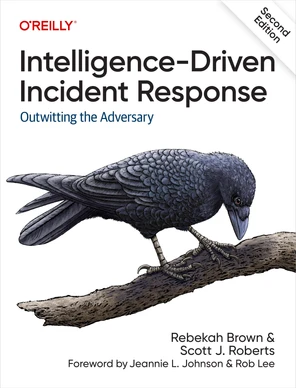
This is the closest thing the field has to a textbook, and it is the book I hand every new analyst. The second edition (O'Reilly, 2023) is the one to buy, updated with SolarWinds-era examples. It walks the intelligence cycle, the Kill Chain, the Diamond Model, and the F3EAD process, then does the thing most CTI books avoid: it teaches you how to actually write and deliver intelligence products for different audiences, and how to reason around your own analytic bias. Both authors come from serious backgrounds, with time across the NSA, the Marine Corps, and U.S. Cyber Command between them, and the book is used as a reference in the SANS FOR578 CTI course. If you buy exactly one threat intelligence book, make it this one.
2. Psychology of Intelligence Analysis by Richards J. Heuer Jr.
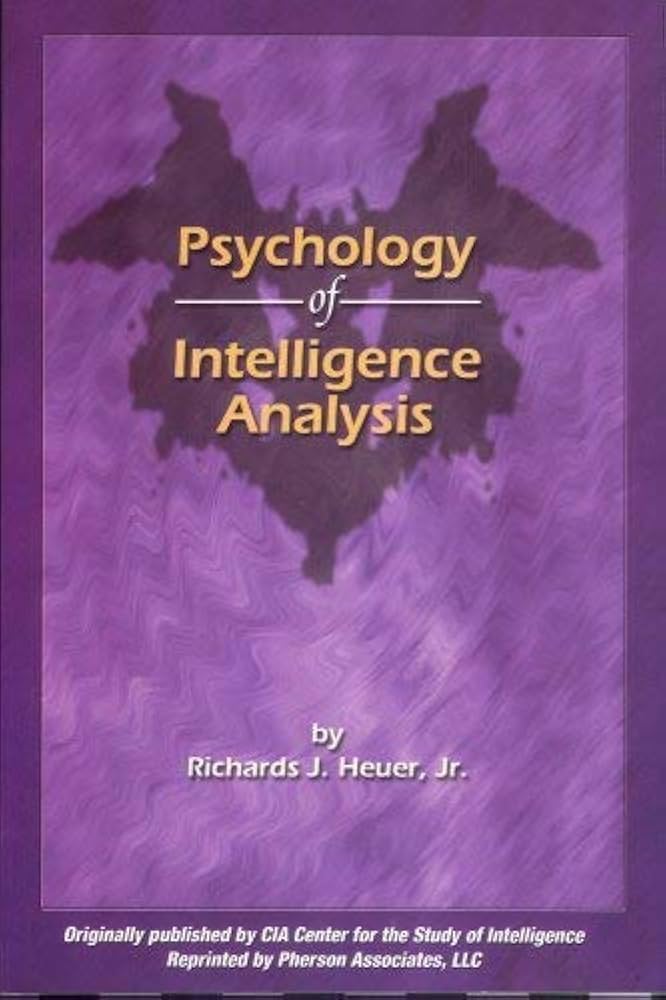
Written for CIA analysts in 1999 and freely available as a PDF from the Agency's Center for the Study of Intelligence, this is the book that teaches you how to think about how you think. It predates cybersecurity entirely and has nothing to do with malware, which is exactly why it has aged so well. Heuer breaks down the cognitive traps every analyst falls into, mindset, anchoring, confirmation bias, and introduces the Analysis of Competing Hypotheses technique that structured tradecraft is built on. It is short, it is free, and it will change how you reason about evidence for the rest of your career. There is no excuse to skip this one.
3. Visual Threat Intelligence by Thomas Roccia
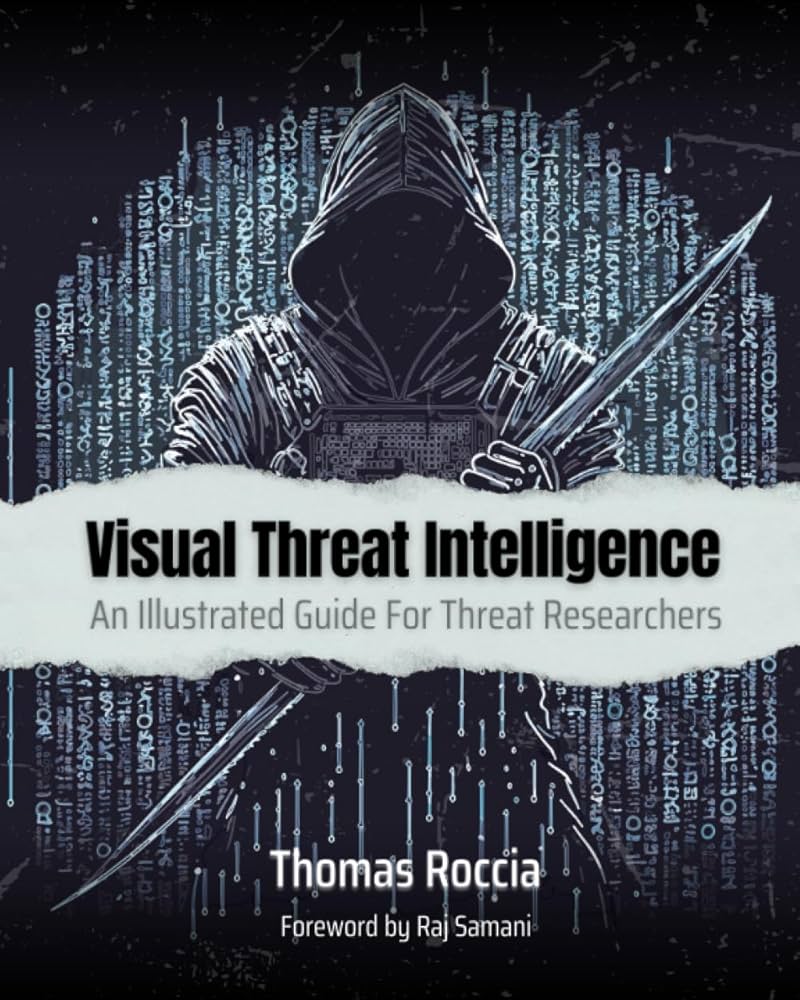
Roccia's illustrated guide (2023) is the friendliest on-ramp in the field. It covers the fundamentals, the major frameworks, and famous cases like NotPetya, Shamoon, and Sunburst, all in a visual, diagram-heavy format that makes concepts stick. It also gets into the mechanics analysts actually deal with, from the Ransomware-as-a-Service economy to how sophisticated attackers plant false flags to mislead investigations. It is ideal for someone starting out, or for an experienced analyst who wants a fast, well-illustrated refresher. If the density of the other two intimidates you, start here and circle back.
Tier 2: Building the Craft
Once you have the core, these deepen the specific muscles: structured analysis, running a program, and hands-on hunting.
4. Structured Analytic Techniques for Intelligence Analysis by Richards J. Heuer Jr. and Randolph H. Pherson
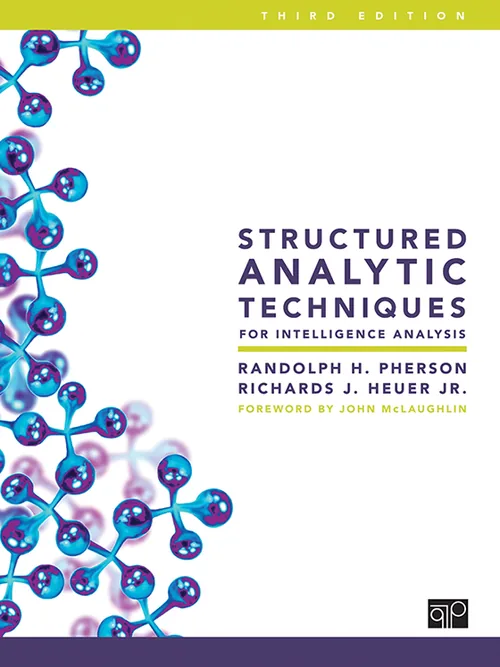
If Psychology of Intelligence Analysis convinces you that structured techniques matter, this is the reference that gives you the toolbox. It is organized by type of technique, so you can flip to the right method for the problem in front of you, whether that is a key assumptions check, a what-if analysis, or a full ACH matrix. It is not cheap and it is not a cover-to-cover read; it is a desk reference you return to for years. Worth the shelf space for anyone serious about the analytic side of the discipline.
5. Operationalizing Threat Intelligence by Kyle Wilhoit and Joseph Opacki
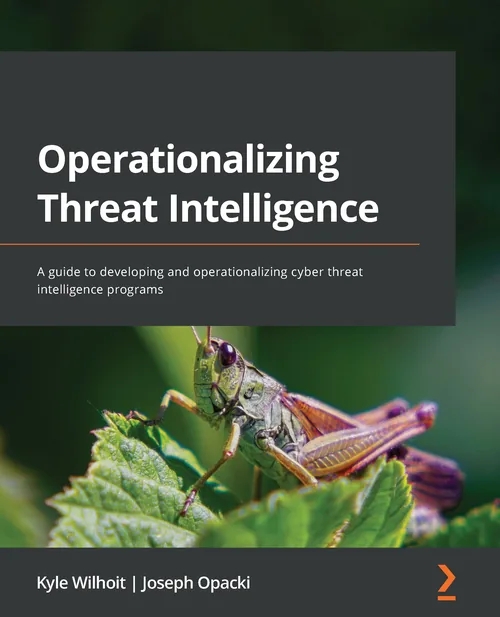
Where the core books teach you to think like an analyst, this Packt guide (2022) teaches you to build the function around you. It covers the full CTI cycle with a program-builder's eye: defining requirements, collection management, enrichment, OPSEC for personas and sock puppets, and the maturity models (TIMM, the Hunting Maturity Model) you use to measure where a team actually stands. Between them the authors bring FBI malware-reversing and nation-state threat research experience. Fair warning: it reads a little dry and works better as a reference you dip into than a book you read straight through. That is a feature if you are standing up a team.
6. Practical Threat Intelligence and Data-Driven Threat Hunting by Valentina Costa-Gazcón
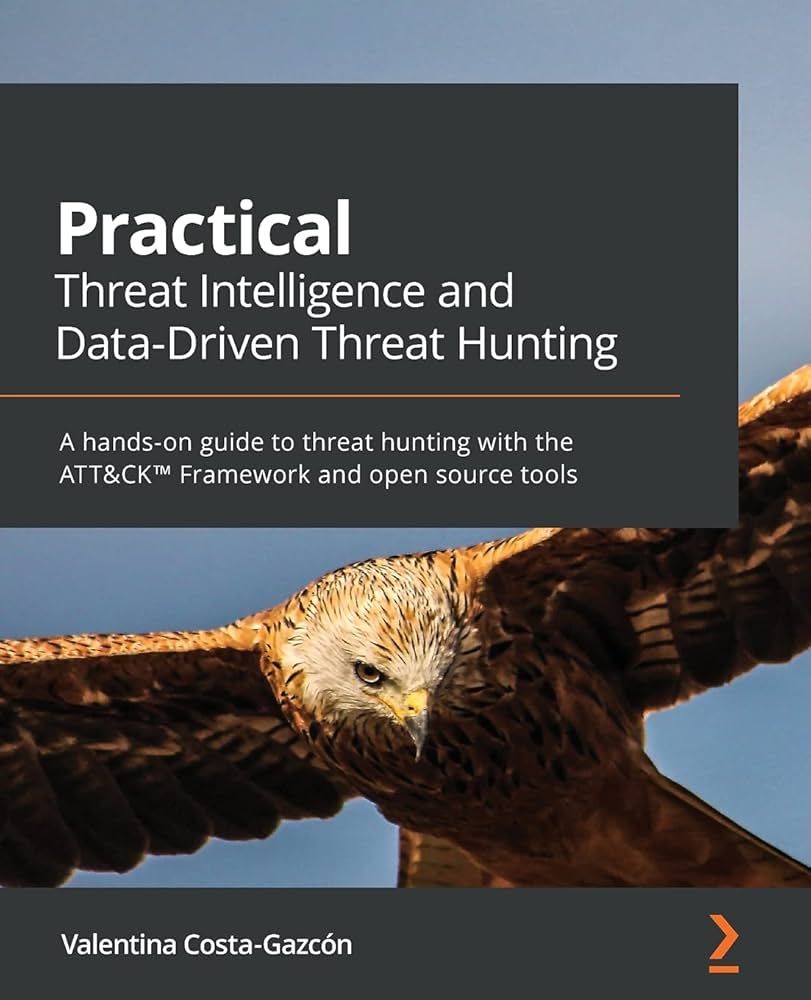
This is the hands-on one. It is built around MITRE ATT&CK and open-source tooling, and it walks you through emulating adversary behavior, hunting for it, and mapping what you find back to the framework. If your role sits on the border between CTI and threat hunting, or you learn by doing rather than reading theory, this belongs on your desk. It pairs especially well with a home lab, because everything in it is meant to be run, not just understood.
7. Cyber Threat Intelligence by Martin Lee
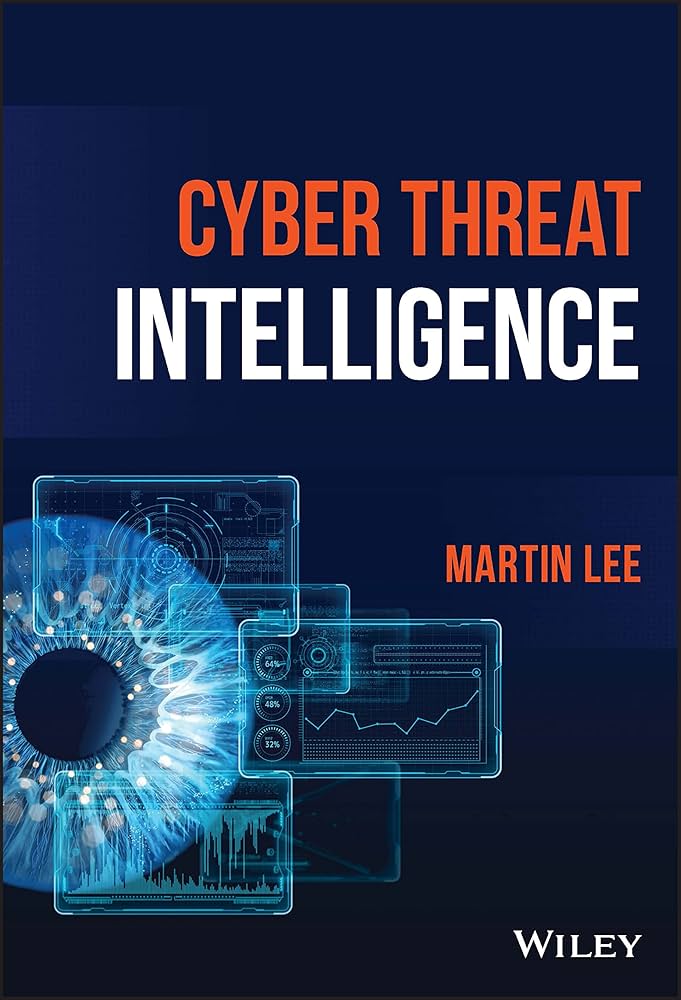
Lee's book (Wiley, 2023) is the more academic, thoroughly referenced entry in the CTI canon. It takes a rigorous, methodical pass through the discipline and the intelligence cycle, and it is a strong choice for analysts who want the well-cited, structured treatment and for anyone studying the field formally. It is denser and less narrative than Roberts and Brown, so I would reach for it second, as a deepening read rather than a first introduction.
A quick honorable mention in this tier: Incident Response with Threat Intelligence by Roberto Martinez, a Kaspersky GReAT researcher, is a good, tool-heavy companion if you want to see CTI wired into real IR workflows with TheHive, ELK, Velociraptor, and Sigma rules.
Tier 3: The Underground
Threat intelligence lives or dies on understanding the people you are tracking and the economy they operate in. These three books are the best education you can get on the criminal underground short of monitoring it yourself, and they map directly onto the dark web and access-broker work that defines modern CTI.
8. Tracers in the Dark by Andy Greenberg
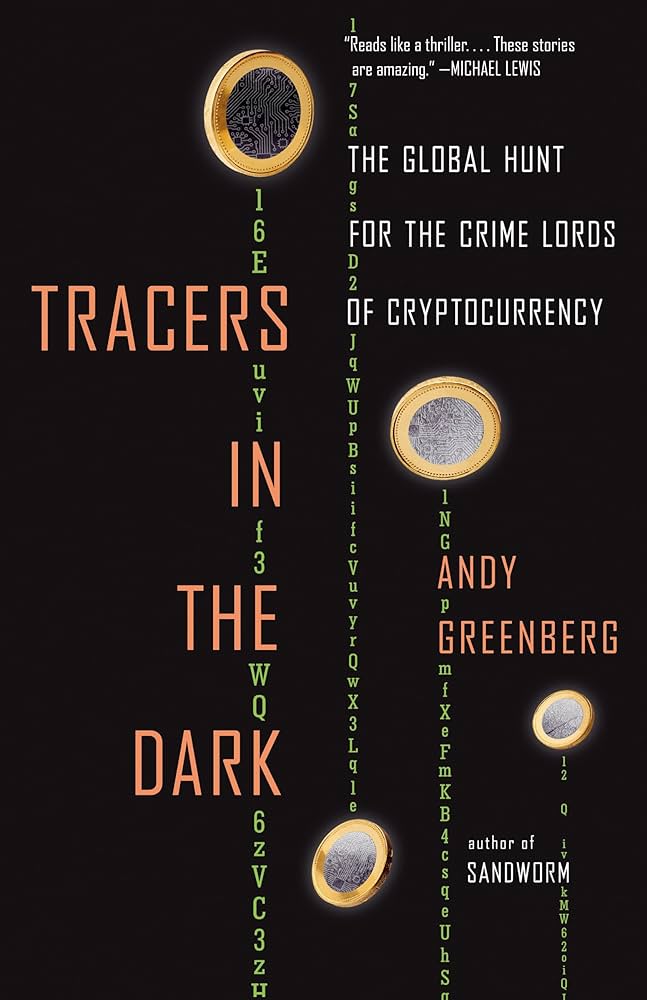
Greenberg's 2022 book is the definitive account of cryptocurrency tracing, following investigators as they unravel the myth that Bitcoin is anonymous and take down dark web empires. For any analyst who touches dark web markets, ransomware payments, or the money side of cybercrime, it is essential, and it is the single best thing to hand a non-technical stakeholder who believes "untraceable" is real. The tradecraft is described more than dissected, so read it for the investigative arc and the mental model, not as a blockchain-forensics manual.
9. Kingpin by Kevin Poulsen
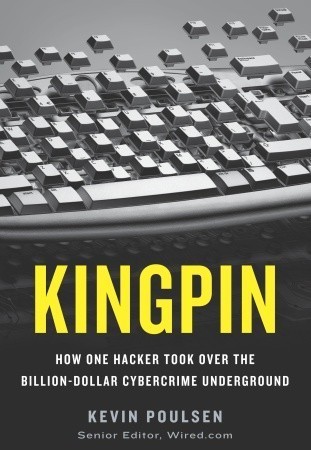
Poulsen's 2011 account of the carding underground, following the rise of a hacker who cornered the stolen-credit-card market, is still one of the best windows into how criminal marketplaces, reputation, and trust actually work among people who cannot trust each other. If your work involves carding forums, stolen data, or the social structure of underground communities, the patterns in this book show up in your day job constantly.
10. Spam Nation by Brian Krebs
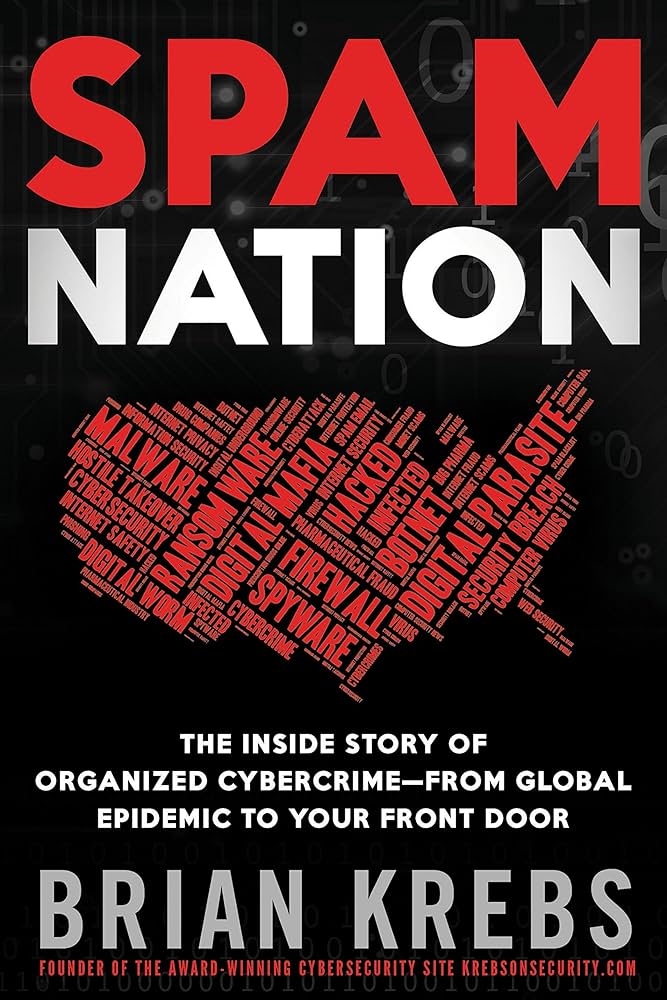
Krebs's 2014 investigation into the Russian cybercrime economy, built around the pharma-spam wars, is a foundational text on how the business of cybercrime is organized, funded, and fought over. It reads as history now, but the structures it documents, affiliate programs, bulletproof infrastructure, and the economics that drive everything, are the same structures underpinning today's Ransomware-as-a-Service and initial-access markets. It is context that makes the modern initial access broker ecosystem legible.
Tier 4: Context and Judgment
These are narrative nonfiction, not manuals. You read them between technical books to stay grounded, and over time they build the pattern library that lets you recognize what you are looking at. Every serious analyst I know has read most of this shelf.
The Cuckoo's Egg by Cliff Stoll (1989) is the foundational text of the entire field. An astronomer chases a 75-cent accounting error and stumbles into a real espionage case, writing what is essentially the first incident-response story ever told, and it reads like a thriller. Start here for the "why this matters" of it all.
Countdown to Zero Day by Kim Zetter (2014) is the definitive Stuxnet narrative and a masterclass in patient, disciplined operational tradecraft at the nation-state level.
Sandworm by Andy Greenberg (2019) is the best book on what state-level cyber conflict actually looks like, told through the GRU's campaign against Ukraine and the NotPetya attack that spilled out across the world.
This Is How They Tell Me the World Ends by Nicole Perlroth (2021) documents the zero-day exploit market from the inside. It is equal parts uncomfortable and necessary reading on how vulnerabilities become weapons.
The Ransomware Hunting Team by Renee Dudley and Daniel Golden (2022) tells the human story of volunteers who quietly broke ransomware encryption to hand victims free decryptors. Read it for the people and the institutional failure, not as a reverse-engineering reference.
The Hacker and the State by Ben Buchanan (2020) is the strategic capstone, a clear-eyed look at how nations actually use cyber operations as instruments of statecraft. It is the book that lifts you from tactical thinking to the geopolitical altitude strategic intelligence requires.
What to Skip, and One Honest Caveat
Two warnings, since a ranked list owes you the downside.
First, do not start with the dense academic texts or the pure technique references. Structured Analytic Techniques is invaluable as a desk reference and miserable as a first read. If someone hands a newcomer a 500-page methodology tome as their introduction to CTI, that newcomer usually quits. Order matters more than completeness.
Second, be a little skeptical of the vendor-produced primers. The Threat Intelligence Handbook, published by Recorded Future, is genuinely useful and free, and it is a fine quick overview of the lifecycle. Just read it knowing it is also marketing, and that its framing gently steers toward the kind of platform its publisher happens to sell. Free is good. Free-and-neutral is rarer than it looks.
Books Teach Theory. Judgment Needs Reps.
Here is the thing no reading list will tell you: you cannot read your way to competence. Every book on this page teaches you how to think about threat intelligence. None of them can give you the reps, the hundreds of small judgments, made under a little pressure and then corrected, that actually build an analyst. That gap between understanding a concept and being able to execute it is where most self-taught analysts stall.
That gap is exactly what CTI Academy's Hunter track was built to close. The books give you the theory; the platform gives you the practice on realistic problems. You work collection and persona tracking inside NullBase, a simulated underground forum, which pairs directly with the underground books in Tier 3. You work real credential and breach data in LeakLens instead of just reading about how stolen data moves. And the SOC Simulator puts you on the receiving end of intelligence so you learn what a finished product feels like to the person consuming it. Read the canon, then go run the reps. If you want to start, explore the Cyber Threat Intelligence learning path, and keep the day's real-world signal in view with our news feed at todayincyber.io.
Frequently Asked Questions
What is the single best threat intelligence book for beginners?
Intelligence-Driven Incident Response by Scott J. Roberts and Rebekah Brown. It is the closest thing the field has to a textbook, covers the intelligence cycle and core frameworks, and uniquely teaches how to actually write and deliver intelligence. If the density is intimidating, start with Visual Threat Intelligence by Thomas Roccia instead, then move to it.
Are there any free threat intelligence books?
Yes. Psychology of Intelligence Analysis by Richards J. Heuer Jr. is freely available as a PDF from the CIA's Center for the Study of Intelligence, and it is one of the most important books in the discipline. The Threat Intelligence Handbook from Recorded Future is also free, though it is vendor-produced and reads partly as marketing.
Do I need to read books, or are online courses enough?
Both, and they do different jobs. Courses and hands-on labs teach tool-specific, executable skills efficiently. Books build the deeper understanding of adversary thinking, analytic tradecraft, and historical context that separates competent analysts from strategic ones. The most effective learners read the canon and then practice the skills in a lab environment.
What books should a threat intelligence analyst read for the dark web and cybercrime?
Tracers in the Dark by Andy Greenberg for cryptocurrency tracing, Kingpin by Kevin Poulsen for the carding underground, and Spam Nation by Brian Krebs for the structure of the cybercrime economy. Together they explain how criminal marketplaces, trust, and money actually work, which maps directly onto modern access-broker and ransomware tracking.
Is Intelligence-Driven Incident Response still worth reading in 2026?
Yes. The second edition (2023) is current, and the frameworks it teaches, the intelligence cycle, the Diamond Model, F3EAD, and analytic tradecraft, age slowly because the underlying problems do not change as fast as tooling. It remains the standard reference and is used in the SANS FOR578 CTI course.
How many threat intelligence books do I actually need?
Fewer than the listicles suggest. Three or four core titles cover the discipline: one CTI craft book, one on analytic thinking, and one or two on the threat landscape. The rest of a good reading list is narrative nonfiction you read over time to build context, not required study.